
New Paragraph

Bad immigration practices can become public safety problems
June 6, 2026

Police become the default response to bad immigration policy

Recent large-scale arrests by both Peel Regional Police and Durham Regional Police collectively highlight Canada’s inability to keep criminals from entering our country for no other reason but to victimize Canadians.


On May 25, 2026, Peel Regional PS announced that along with partner agencies they had “…arrested 17 individuals, majority of whom have ties to an international criminal network known as For Brothers, which targeted South Asian business owners and community members across the region, Canada and the United States”, in relation to extortions, shootings, arson, firearms and drug offences. These are allegedly extremely bad people. It is also reported than none of them were Canadian citizens but were visitors to Canada on various temporary visas or permits.


Then on June 5, 2026, Durham Regional PS revealed that “46 individuals have been arrested and 164 suspects remain wanted. The investigations connected to Project Jetsetter date back to 2019, involve more than 1,440 charges, and remain ongoing as investigators continue to identify additional incidents linked to criminal tourism.” Of particular concern is that “This initiative targeted organized groups travelling to Canada for the purpose of executing high-profit crimes, often connected to international criminal networks.” 


Thankfully, our police services are working effectively together to take these members of organized crime gangs off the streets and preventing further victimization by them. But for how long? How many more of these dangerous thugs remain active and how many more are entering our country as we speak? Our judicial system is porous enough, but obviously our open borders are not keeping people who would do us harm from entering our country. Nor are our deportation practices for non-citizens or visitors as a rule. Every one of these hoods needs to either be in prison or on a plane bound for their home country immediately. 


In essence, Immigration Canada and Canada Border Services Agency are responsible for screening people who are trying to enter Canada and ensuring criminals are inadmissible. That combined with information from intelligence and police agencies, should not only keep people with criminal intentions out, but is also meant to keep people who are a threat to national security (AKA terrorists) out of our country.


I would never blame the dedicated public servants within the federal agencies that protect our borders for this untenable situation. My concern is the policy framework that Canada’s government dictates them to work within and the resources the agencies have to effectively protect us. 


I cannot offer substantive evidence that the previous Liberal or even PC governments have diminished the authorities of our immigration system to refuse entry or deport criminals who are not Canadian citizens.


Undoubtedly, under Prime Minister Trudeau, immigration targets rose significantly. Under PM Carney, there has been discussion that previous admissions outweighed Canada’s ability to absorb people in terms of health care, housing and social services, and target numbers have been lowered. Although there is no known evidence to suggest processing standards were lowered to meet increased immigration volume, there has been debate as to the impact of the previous higher targets on Canada’s ability to properly screen immigration candidates. 


Critics and commentators argue that higher admission numbers increase the risk of security screening failures and I agree. More screening work without increased resources and the need for higher levels of diligence that organized crime and national security threats now bring, is a recipe for disaster. At the same time, visitors to Canada – like many of those recently arrested, do not undergo detailed background checks and are subject to a lower level of security screening on entry. I’d argue that the whole system requires a reset to address these emerging concerns.


What if all of the almost 200 people highlighted above were more than criminals, but were terrorists intending to commit violent attacks on Canadians? Perhaps it is too late, and our screening practices have already admitted such groups or individuals who are here but have yet to act, however it’s not too late to harden our security ethos and ensure involved agencies have sufficient resources to meet our current security needs before it is. Our security and police agencies can continue to do their best to deal with those that have already slipped through. 


Obviously, all of us who are not Indigenous Canadians are immigrants or descendants of immigrants. Our country was largely built by those who came to Canada from around the world, seeking a better life and to raise their families in the greatest country on earth. My comments are not meant to be anti-immigration suggestions in any way, but government needs to wake up to and act on these critical public safety issues immediately.


The time to get tough on immigration and visitor to Canada security fronts is now. Not as an announceable in the run up to the next federal election, but now.

By Chris Lewis July 28, 2026
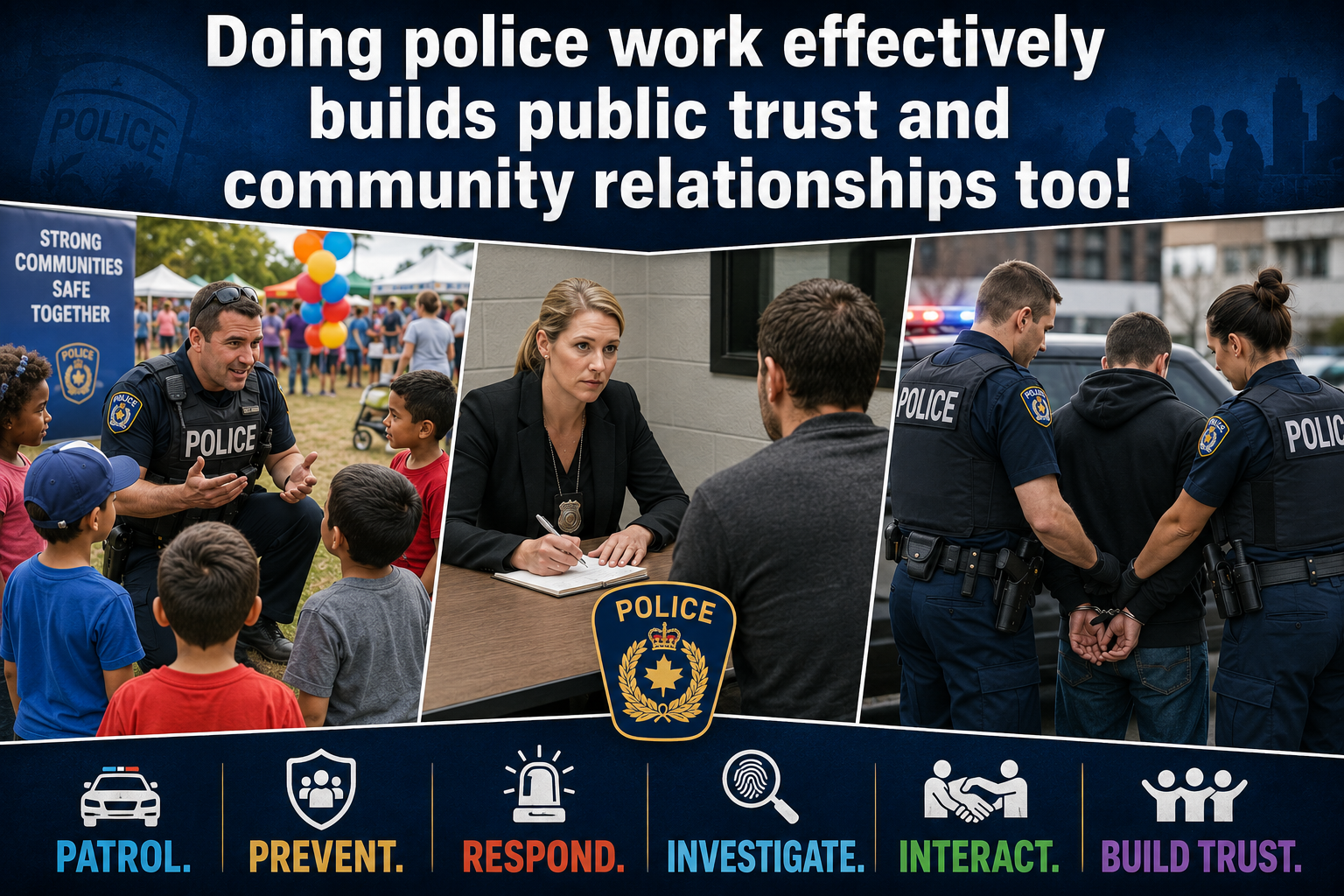
Every single day I see social and mainstream media coverage of wonderful community events where police are front and centre as they interact with the public in non-enforcement environments. Youth events; community BBQs; coffee with a cop; fairs; citizen police academies; and more. All good and all beneficial. It’s undoubtedly something police should have been doing more of for decades, including during my tenure as OPP Commissioner. At times we just didn’t have the on-duty personnel to do that and at other times we simply dropped the ball by not attending. I take full responsibility for any such failing that occurred within OPP communities while I was at the helm. At the same time, decades ago, police / community relationships weren’t as strained as they now are, for a variety of reasons. Some of those tensions have been born from incidents across North America that have shown police in a negative light. Although a number of those shown in brief clips on social media platforms didn’t show entire events where police use of force was quite justified, they have swayed public opinion. Conversely, in many cases police were proven in courts to have been criminally heavy-handed. Reported cases of police corruption across the continent have also sewn some seeds of distrust in police. Both those proven in court and those not, still hurt the reputation of police in the eyes of those they are sworn to protect. Police need to be mindful of that in terms of their daily interactions with community members in both enforcement and non-enforcement activities. So, what has changed in policing from my day with regards to police staffing challenges that now seem to allow so much planned interaction? Have police services acquired additional officer complements to be able to conduct necessary preventative patrol; crime and traffic prevention activities; deal with tactical and public order incidents; respond to calls to service; conduct resource intensive investigations; investigate organized crime groups; deal with border integrity challenges and address the 24/7 flow of handguns being smuggled in from the U.S.? I know that all the old crimes and disturbance are still being occurring, as are new and complex investigations. If all those staffing needs are being met and they can still attend and manufacture every community event possible, that’s great news. But given that the many North American police officers I speak with personally and through social media sites claim that is not their staffing reality, it doesn’t appear that the math adds up. Many police services have the bare minimum of officers on duty to meet their operational requirements. Although most have Community Services Officers or similar public relations entities to liaise with assorted community groups, religious institutions, business associations and schools, more often than not those resources are sadly limited. I hear stories of stacked calls; members of the public waiting for hours or days for a police response; officers going off on sick leave due to being under resourced and overworked; and simply police services being underfunded and therefore understaffed to meet current operational and prevention program needs. In one rural agency, tales of only two junior officers working entire weekends and patrolling immense geographic areas without backup or supervision, are not uncommon. I’m a firm believer that police services are judged by the communities they police in a variety of ways, including participation in events as outlined above. Some of the most critical assessment benchmarks are also: timely responses to calls for service; visible patrol presence; treating people in the worst hours of their lives with professionalism, empathy and respect; effective communication; and investigative effectiveness. People want to be safe and feel safe 24/7. Knowing the police will drive through the neighborhood occasionally and come quickly when they are called upon are important hallmarks. Treating people – like witnesses, victims and suspects well when they do attend a call; conducting investigations effectively and keeping victims informed as they do, all go a long way in building community confidence in their police. In a perfect world, police would be all things to all people. Having donuts with kids and hanging out at county fairs – as well as being upfront at most community events is marvellous. At the same time being able to meet all the other resource demands in a best-in-class manner without burning out limited personnel, is a must. If all of that can be accomplished, it’s a picture-perfect scenario. But if not, the balance needs to be tipped towards patrol, response and investigative demands. The public might like seeing the police at community events, and so they should, but that will all be forgotten the minute they call police for a valid concern, and nobody comes.
By Chris Lewis March 28, 2026
Leadership is inundated with risk, every hour of every day, in all sectors. In policing, legislative authorities and established policy are the ever-present guideposts, but occasionally policy just doesn’t apply. At times someone has to just make a decision to do something, or not, or they will fail the public they serve and the personnel it is their duty to lead. If it goes bad, time to own up, do damage control, learn from it and move forward. It always frightened me when I saw some at the senior executive level in policing think that supervisors and managers operate in a pristine little bubble where nothing should ever go wrong. Then when it did because some supervisor tried their best to make something work for all the right reasons, they wanted to pigeon-hole the person that took the risk. There were times during my own career when executives were not encouraged to take any risk either. In fact, taking risk was career risk in itself. Despite the best of intentions, if it went bad, the one ‘responsible’ be forever labelled as having failed. Even if the gamble went well, the jaundiced eyes from above would still forever look at them as being a potential liability. It became the “Oh, him. He’s the one that...” At times the daily decision making of high-level commanders would be second-guessed by those in the executive suites – some of whom had never really commanded anything. My buddy retired Chief Wayne Frechette used to describe these folks as: “They’ve never been out after dark on company time.” I know this same concept was alive in many other police services. Some at executive levels actually did serve in operational roles at some point but they never took a risk. Somehow, they were fortunate to skate through difficult situations through sheer luck as opposed to good decision-making and never developed any scar tissue along the way. They didn’t learn from failure – they survived by luck. They also were viewed by weak executives above them as being golden because there was never a milli-second of negativity around them. They were Teflon. But those that worked under their “command” (for lack of a better word) had no respect for them. They simply watched them walk around with coffee in hand, never leaving the office or making a decision. It wasn’t leadership, but it did pave the way to stardom from on high, for some. True leaders do take risks at times. Many I worked with and for did it all and did it well. They did so in the best interests of those they served and those they led, because it wasn’t about themselves, but was done in the service of those that placed their trust in them. Policy simply doesn’t fit every situation. It is most often a guide that anticipates most circumstances that employees will face, particularly the more common (high-frequency) ones. But it cannot predict every possible scenario. When that happens in policing, it can occur in very unlikely situations (low-frequency) that are incredibly high-risk. Supervisors cannot say “Sorry folks, the book doesn’t cover this one” and run away crying. They also don’t have time to tell bad guys, “Hey big fella, sit tight. We need to take a pause here and get the whiteboard out so we can have a group-think about how to stop your murderous rampage.” I think that many pseudo-leaders – far too many, are afraid to make risky decisions out of fear that an error will jeopardize their career. Instead, they risk their careers by not making decisions. Or as I like to say: “their fear of career-risk, risks their careers.” This can be fatal in the policing world. When a police supervisor shirks their responsibilities or quivers, sucks their thumb, and prays for the situation to go away, thankfully constables will come forward and do their best to get their teammates through it. Sometimes that ends well and when the supervisor emerges from their fear-induced coma, they will more often than not take credit for the success. But when the situation goes to hell-in-a-handbasket – despite best efforts, the pseudo-leader will document the risk-taking employee and add another bullet-point to their list of things they’ve done to “hold people accountable.” The panel at their next promotional interview will likely hear the false rendition proudly told. I hear examples of this practise from serving police officers across North America on a much too frequent basis. True leaders develop a culture of trust among those they lead that their suggestions and feedback are encouraged and valued. Their confidence that the leader wants their input encourages them to constantly analyze situations and give thought to what policy says and the options available when policy says nothing. That is good for the employee’s development and may save the leader’s hind-end and the continuity of the team on occasion when an employee steps forward in a crisis. Having said that, there will clearly be situations where there isn’t time for the whiteboard, and a decision needs to be made by the responsible “leader.” When it doesn’t work out, the real leader will step forward and be accountable. But when it does go well, the true leader will allow the light to shine on the team they have the honour to lead. In my view, we’re not seeing enough of that in North American policing. We need more genuine leaders at all levels of law enforcement organizations. Developing and promoting real leaders that can manage risk effectively is a must. Anything less fails everyone.
By Chris Lewis March 26, 2026
They used to be simply a "nice to have."