New Paragraph

Cries to defund police across North America are for the most part fuelled by people who will never be happy until police are unarmed; seldom seen; and let everyone do whatever they want, whenever they want. Valid concerns over the killing of George Floyd by Minneapolis Police in May have spiraled to this ridiculous notion that all police are bad and that less of these evil beings would prevent such a tragedy from occurring in future.
Yes, police need to do better than they have in some cases, in some communities. There should never be any systemic or individual racism, or any excessive use of force, within any police department, anywhere.
Undoubtedly, “de-escalation” should always be the go-to response by police – as opposed to use of deadly force, where feasible. Police services must have strict policies regarding the use of force, including positional-asphyxia and carotid restraint issues, as well as kneeling on throats, so as to not kill people being arrested – unless as a last resort to protect the lives of innocent people.
I agree that in some instances, mental health professionals – either alone or in partnership with armed police officers, would be a better approach to wellness checks and non-violent mental health occurrences. That is of course with the knowledge that despite best efforts, some reported “non-violent” calls will become very violent in a heart-beat.
Police executives should always be assessing the environment and continually developing effective partnerships with other agencies, while making policy, training, staffing and deployment changes to best meet the policing needs of the community. Police budgets are forever going to be a huge issue for municipalities and Chiefs must always endeavor to meet those needs in a fiscally prudent way. They owe that to elected leaders and to their taxpayers.
But guess what? We have great police services in Canada! All of this and so much more has been in place for years across this country and is governed by legislation and oversight frameworks like no other profession.
Having said that, we have seen a number of poor decisions and occasional blatant criminal acts by police officers, so police services must constantly strive to be nothing less than the “best of the best”, and are obliged to do so within a reasonable fiscal envelope. That standard must continue for all eternity.
Many police budgets – including the provincial police forces and the RCMP, have been cut and slashed incessantly, despite emerging crime trends; increasing salaries; the growing threat of terrorism; rising equipment and technology costs; and protracted public protests that have at times grown violent and resource intensive. Some services struggle to staff their patrols. The Toronto Police Association continues to raise concerns about stacked calls; response times and officer safety issues. A number of services have taken officers from investigative units to fill uniformed patrol vacancies. Some OPP detachments that once deployed several officers on a shift are down to only a couple of constables on duty, because of budget shortfalls. That is ineffective and dangerous, especially in isolated communities that are many miles from backup. As well, a number of provincial investigative units are heavily challenged to meet their mandates in assisting other agencies.
A municipal police friend told me several years ago, that “At one time when we called the OPP for help with a major occurrence, it was like calling in the National Guard. They showed up in droves. Now they’d be lucky to be able to send us an officer or two.” I’m afraid that situation has worsened since.
The RCMP is in terrible shape. Their detachments in the contract policing provinces (i.e. Nova Scotia) are woefully short of personnel. In Ontario, the RCMP is no longer a major player in the organized crime investigation world. Through no fault of their members, National Security investigations are the priority and every man, woman and child investigator is assigned to those operations.
As a rule, when funds are cut, staffing suffers. When a personnel shortage occurs, prevention programs and training are often the first on the chopping block. Preventing victimization is one of the most important things police do, and training is critical to officer safety and to adequate and effective policing. But the reality is that the organizations have to be able to put officers in police cars.
Something has to give. Legitimate efforts by police leaders in civilianizing some roles; and deploying personnel and responding differently – in a data-driven way; while maximizing technology, continue. However there is often still a delta between the need for armed officers and staffing realities.
What are the broader impacts of the current state of policing on officer morale and wellness? The dialogue and focus on providing professional support to help police personnel deal with the impacts of singular occurrences or a career of responding to traumatic events has increased over the past several years. But working short-handed day after day while dealing with a constant barrage of criticism from armchair critics – some deserved and much not, does nothing to promote member wellness.
So is it an acceptable option to further cut police budgets because of the flexing of muscles by some community groups and further denigrate this already fearsome state of affairs? I think it’s a recipe for disaster.
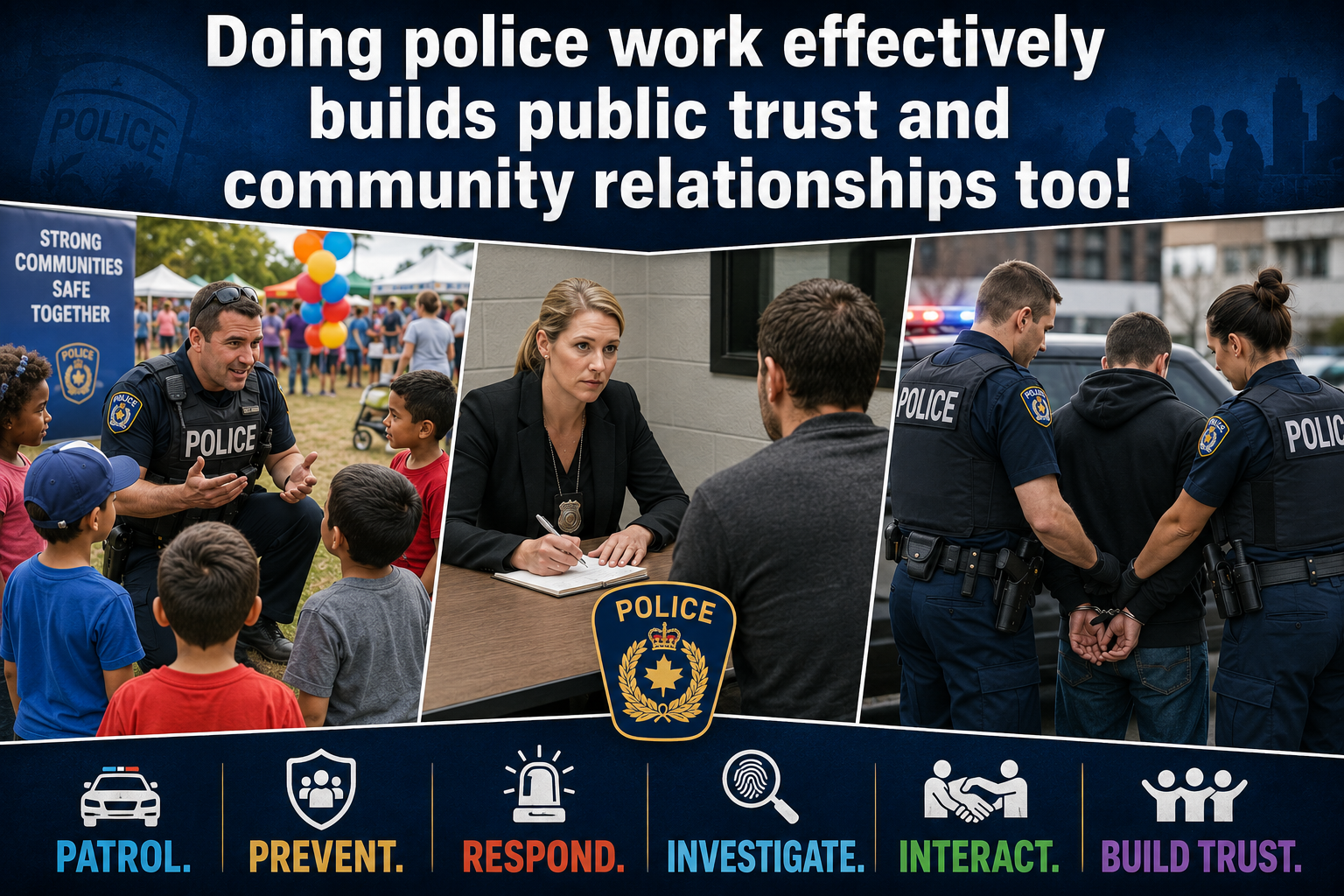
Alternatively, we need to “re-fund” our police services back to appropriate levels to best meet community and officer safety needs, not further “defund” them. I truly believe the majority of reasonable citizens would prefer to see more but perhaps better police, than see fewer officers and even less effective police services.
In support of that, we also need to hear a much louder voice from the largely silent majority of people that truly do support their police services. They need to “defend” police, loud and clear.
I fear that if this lopsided “defund police” rhetoric and negativity continues to swirl, it will bring policing to the point that it will be all but impossible for police services to keep communities safe and healthy. The ability to attract good recruits and retain healthy police officers will continue to decline. There won’t be enough critical police mass to meet public safety needs and police services will be forced to have their phone numbers unlisted in order to operate within their funding envelopes.