New Paragraph
Policing depends on public trust. So does police oversight. When either loses credibility, both suffer and the public they are sworn to serve isn’t sure who to believe or where to turn.
In recent years, calls for stronger police oversight have grown louder, often driven by a small number of high-profile misconduct cases. Confidence in institutions by the public – often fueled by ridiculous social media theories and damnations, is more fragile than in the past, and reputational damage spreads faster. Despite the fact that Canadian police officers operate under tight legislative and regulatory frameworks that exceed any other Canadian profession in my view, existing oversight bodies feel pressure to take action quickly when bad things happen, as isolated as they may be. But there is a risk in this moment that deserves equal attention: the risk of overreach.
The seven officers who have been alleged to have committed crimes – including serious ones that involve organized crime, must not be allowed to redefine an entire profession.
Public trust certainly adds urgency to this moment. When corruption cases like this surface, the public does not necessarily see them as isolated failures. They see a system that is broken and in my view in this instance they see that unfairly.
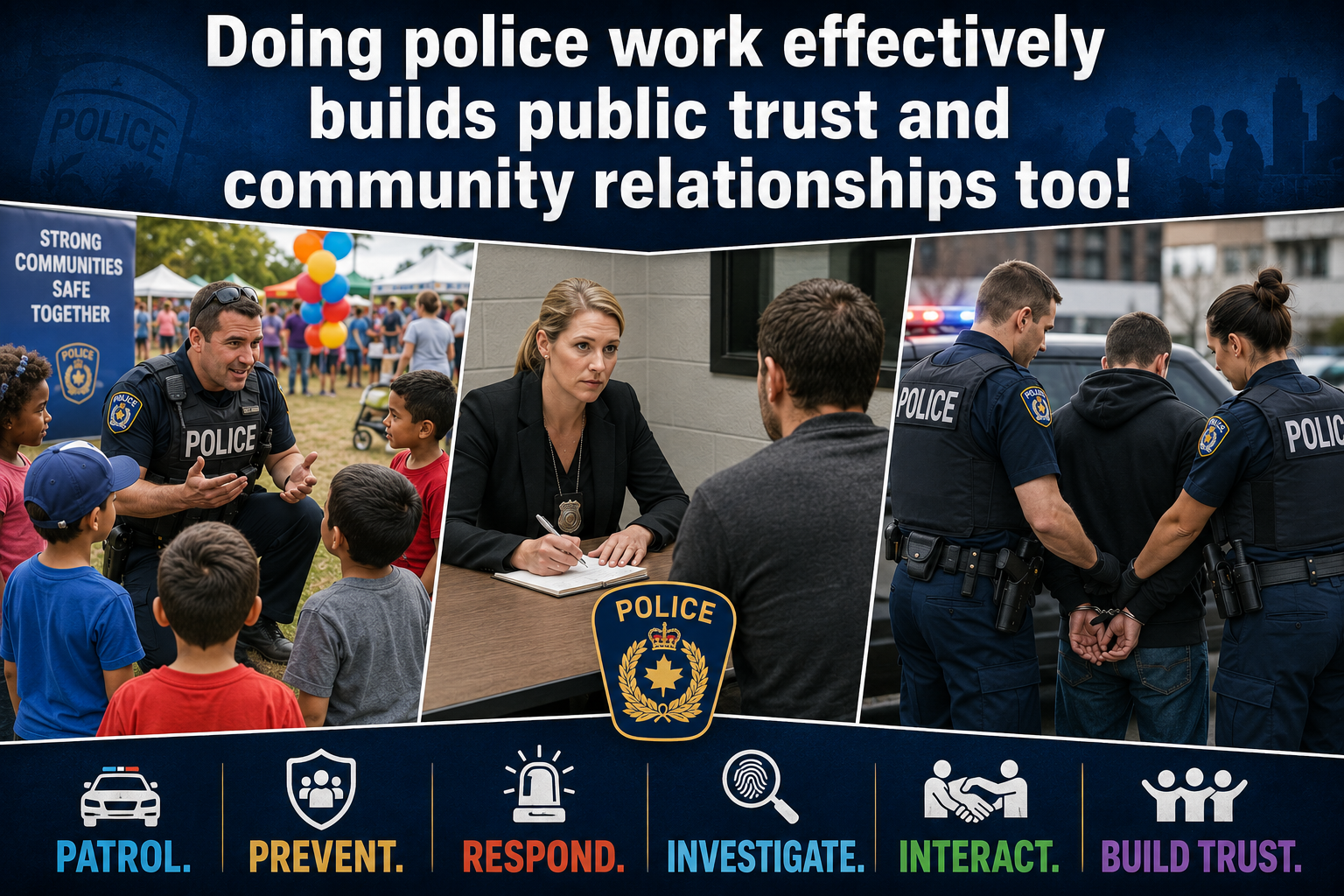
Policing is unlike most professions. There are over 70,000 police officers in Canada, comprised of federal, provincial and municipal officers that work under the worst of circumstances at times and face the harshest of critics. As a result of the arrests of seven serving Toronto Police Service (TPS) officers as well as a retired officer, then the subsequent suspension of two additional TPS officers and two Peel Regional Police Service officers, a large portion of the Canadian public are focusing on the ‘bad’ and forgetting the wonderful and brave police work occurring in their communities 24/7.
Officers exercise coercive authority on the public on behalf of the public, often in volatile environments. They have right to take away people’s liberty and in the worst of situations to take lives. That authority most definitely demands the greatest of accountability, but it also demands reasonable, sensible and balanced oversight. Oversight systems designed around ‘worst-case scenarios’ risk governing by exception rather than thoughtful considerations and reality.
One of the most overlooked consequences of overly broad oversight is its impact on ethical officers. When serious misconduct is identified, entire services face scrutiny and as a result of the Inspector General of Policing’s announcement to inspect all 45 police services in Ontario, the impacts are far reaching and not isolated to the police service of the members in question. The risk is that the resulting collective stigma will not only damage public trust but will also hurt officer morale; officer initiative may decline; recruiting could be impacted; and the reputation of the entire profession across Ontario will be damaged because of the alleged actions of a few. Oversight that blurs critical lines risks judging officers by association rather than their individual conduct. Officer trust in the oversight system and public trust in the policing profession could both be further harmed.
As a result, both the Toronto Police Association and the Police Association of Ontario have rightfully expressed their concern regarding the inspection of all of Ontario’s police services. Their distress is that the announcement may be read by many that police corruption is rife across the province.
At this point we do not know how much of this alleged criminal activity occurred off duty, versus on. We don’t know all the details of what they may have done and how, let alone what processes, policies or systems within the TPS that may have to be examined by the Inspector General. He may well have identified them all, but perhaps not. As the investigation portion by police continues, more things for inspection may be identified. In the meantime, I have no doubt that Ontario’s police Chiefs are reviewing their processes based on what they know so far, to ensure their policies, systems and internal oversight mechanisms are as tight as they can reasonably be.
The seven charged officers are suspended and before the courts. The justice system is entrusted with dealing with these allegations from here. Others not charged but under investigation are suspended as well. There was no rush to begin a review process as this unfolds. Announcing that it will occur when the criminal investigation is complete and when they are armed with a more fulsome understanding of the issues that should be examined, would have been more appropriate.
None of this lessens the need for accountability. It argues for thoughtful processes, analysis and reporting. Misconduct should be addressed decisively and dealt with through due process as it is, but broad oversight driven by isolated wrongdoings risks weakening the institutions we all depend on.
Public trust matters. Undoubtedly. But so does institutional trust in police officers. In my view, processes that signal broad-based suspicion undermine the trust they are meant to protect. Oversight works best when it is firm, fair, and controlled.