New Paragraph

What police don’t need during a crisis
January 4, 2025

Police know how to conduct major investigations and find bad guys. Although several specific factors change from case to case, their general investigative playbook remains the same.


Once some ungodly multi-victim attack occurs, in very simplistic terms: the scene is protected, and the health of the living victims is looked after. Forensic experts begin processing the crime scene. Witnesses are located and interviewed. Physical evidence is gathered. Area and witness video recordings are collected and analyzed. Victims are identified. An off-site reunification centre is established where there are multiple victims. Next of kin notifications begin.


At any point – if a suspect or suspects become known, their background is gathered, and the hunt begins. They need to be apprehended before anyone else is hurt. Area law enforcement officers need to know suspect details ASAP.


“Motive” is at top of mind as investigators are synthesizing all this information, whether the suspect is identified or not. Of course, establishing motive often leads to identifying the suspect, but at other times identifying the suspect helps fill in the blanks on motive. What was the initial basis of what became a murder? Was it a robbery? Could it have been a street fight gone bad? Was it simply a want or need to kill someone specific or maybe anyone at all? That’s for investigators to sort out.


There is an onus to warn the public or at least tell them something, i.e. “ongoing threat”, “stay indoors”, or “no threat to public safety”.


There are reporting protocols to follow. Senior officers need to be advised up the food chain as do their political masters, so everyone knows what is happening. None of that should detract investigators from doing what they do best – catching killers.


But that’s when the ravenous “thirst for knowledge” and political grandstanding often take over and completely interfere with police work. The only knowledge the investigators are thirsty for in those early hours is evidence and then identifying, locating and capturing bad people. They do not need politics monopolizing their time or efforts.


The New Years Day massacre in New Orleans was big. Fourteen innocent party goers were killed and dozens injured. The world wanted to know what happened and the community wanted to know if they were in danger. I absolutely get that.


However, what sometimes comes with such tragedies is everyone wanting to know everything. We see it in most mass murder cases, but this was an exceptional example of the insanity surrounding such a high-profile incident. Whatever blanks weren’t immediately filled in by police officials and verified mainstream media reports, were filled in by social media. In such cases police totally lose control of the narrative as rumours, theories, falsities, conspiracy theories and “hey look at me” games take over. The political party and individual positioning in this case was nauseating.


In any multi-agency response, having the leaders of those agencies at press conferences in a united front makes sense. The public needs to have confidence that the situation is in the best of hands.


But where did these massive press conferences where police officials are flanked by numerous politicians come from? I can see some elected leaders being present when a new program is launched or government funding is being announced, but it should never be in the early hours of a mass murder. Having a bunch of partisan wonks peacocking on stage and in follow-up interviews, helps no one at the operational level.


As some of them were speaking, I was responding to their dumb questions in my mind:

Was it a terror attack? Maybe, but let the experts figure that out. In the meantime, it’s a mass murder.

Was the killer an illegal immigrant? Let’s worry about that when the dust settles.

What political party is to blame for allowing him into the country? We don’t care. Maybe he was born here. Let’s sort that out if he turns out to be an illegal immigrant.

Why wasn’t the area more secure? Good question for a future debrief.

We need to get the FBI and HSI leaders before a government committee right away so we can find out who failed! Shut up. We have police work to do.


There are always enough social media theories, private citizens’ investigations into suspects, outright lies and misinformation being spread to the public, without silly partisan games sidetracking investigators who are fighting to stay ahead of legitimate theories and tips. In the early hours of a mass murder case investigators are probably the busiest they have ever been, and don’t need any of this interference.


Controlling the social media fever is next to impossible. It would take a sudden level of maturity across the populace that may be unattainable. But politicians at all levels need to get the message that they are not welcome on stage at operational press conferences and their comments to the media – if asked for them – aside from expressing sadness, thoughts, prayers and confidence in the police, should be “Our law enforcement agencies are investigating, and we need to let them do what they do.” Adding any theories, raising questions or passing blame is totally wrong.


If elected officials truly care about their electorate and feel the need to say more, they should have some prior dialogue with the police leaders or their Public Information Officers to ensure that what they say is helpful as opposed to harmful. Otherwise, be quiet.
By Chris Lewis June 6, 2026
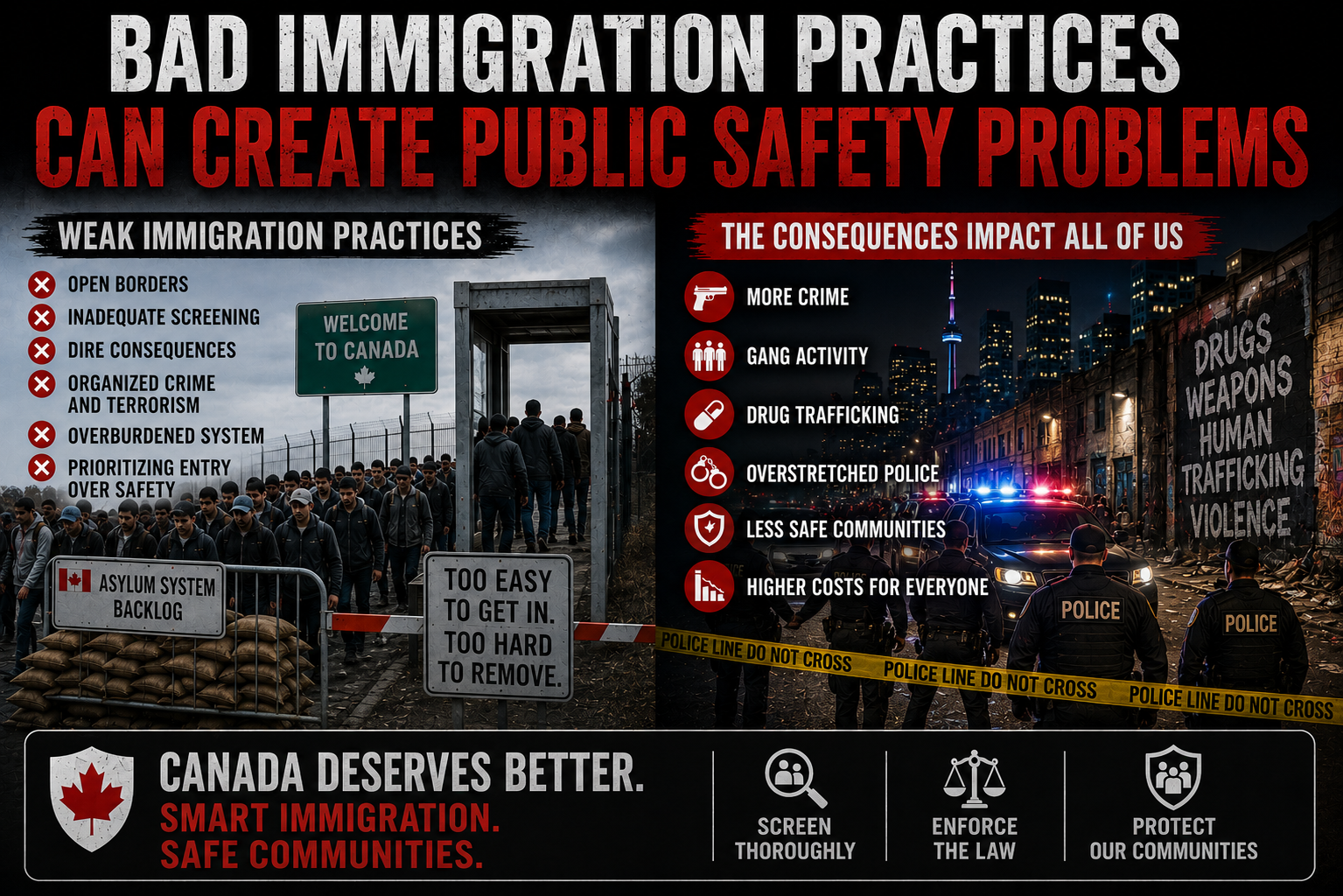
Police become the default response to bad immigration policy
By Chris Lewis March 28, 2026
Leadership is inundated with risk, every hour of every day, in all sectors. In policing, legislative authorities and established policy are the ever-present guideposts, but occasionally policy just doesn’t apply. At times someone has to just make a decision to do something, or not, or they will fail the public they serve and the personnel it is their duty to lead. If it goes bad, time to own up, do damage control, learn from it and move forward. It always frightened me when I saw some at the senior executive level in policing think that supervisors and managers operate in a pristine little bubble where nothing should ever go wrong. Then when it did because some supervisor tried their best to make something work for all the right reasons, they wanted to pigeon-hole the person that took the risk. There were times during my own career when executives were not encouraged to take any risk either. In fact, taking risk was career risk in itself. Despite the best of intentions, if it went bad, the one ‘responsible’ be forever labelled as having failed. Even if the gamble went well, the jaundiced eyes from above would still forever look at them as being a potential liability. It became the “Oh, him. He’s the one that...” At times the daily decision making of high-level commanders would be second-guessed by those in the executive suites – some of whom had never really commanded anything. My buddy retired Chief Wayne Frechette used to describe these folks as: “They’ve never been out after dark on company time.” I know this same concept was alive in many other police services. Some at executive levels actually did serve in operational roles at some point but they never took a risk. Somehow, they were fortunate to skate through difficult situations through sheer luck as opposed to good decision-making and never developed any scar tissue along the way. They didn’t learn from failure – they survived by luck. They also were viewed by weak executives above them as being golden because there was never a milli-second of negativity around them. They were Teflon. But those that worked under their “command” (for lack of a better word) had no respect for them. They simply watched them walk around with coffee in hand, never leaving the office or making a decision. It wasn’t leadership, but it did pave the way to stardom from on high, for some. True leaders do take risks at times. Many I worked with and for did it all and did it well. They did so in the best interests of those they served and those they led, because it wasn’t about themselves, but was done in the service of those that placed their trust in them. Policy simply doesn’t fit every situation. It is most often a guide that anticipates most circumstances that employees will face, particularly the more common (high-frequency) ones. But it cannot predict every possible scenario. When that happens in policing, it can occur in very unlikely situations (low-frequency) that are incredibly high-risk. Supervisors cannot say “Sorry folks, the book doesn’t cover this one” and run away crying. They also don’t have time to tell bad guys, “Hey big fella, sit tight. We need to take a pause here and get the whiteboard out so we can have a group-think about how to stop your murderous rampage.” I think that many pseudo-leaders – far too many, are afraid to make risky decisions out of fear that an error will jeopardize their career. Instead, they risk their careers by not making decisions. Or as I like to say: “their fear of career-risk, risks their careers.” This can be fatal in the policing world. When a police supervisor shirks their responsibilities or quivers, sucks their thumb, and prays for the situation to go away, thankfully constables will come forward and do their best to get their teammates through it. Sometimes that ends well and when the supervisor emerges from their fear-induced coma, they will more often than not take credit for the success. But when the situation goes to hell-in-a-handbasket – despite best efforts, the pseudo-leader will document the risk-taking employee and add another bullet-point to their list of things they’ve done to “hold people accountable.” The panel at their next promotional interview will likely hear the false rendition proudly told. I hear examples of this practise from serving police officers across North America on a much too frequent basis. True leaders develop a culture of trust among those they lead that their suggestions and feedback are encouraged and valued. Their confidence that the leader wants their input encourages them to constantly analyze situations and give thought to what policy says and the options available when policy says nothing. That is good for the employee’s development and may save the leader’s hind-end and the continuity of the team on occasion when an employee steps forward in a crisis. Having said that, there will clearly be situations where there isn’t time for the whiteboard, and a decision needs to be made by the responsible “leader.” When it doesn’t work out, the real leader will step forward and be accountable. But when it does go well, the true leader will allow the light to shine on the team they have the honour to lead. In my view, we’re not seeing enough of that in North American policing. We need more genuine leaders at all levels of law enforcement organizations. Developing and promoting real leaders that can manage risk effectively is a must. Anything less fails everyone.
By Chris Lewis March 26, 2026
They used to be simply a "nice to have."