New Paragraph

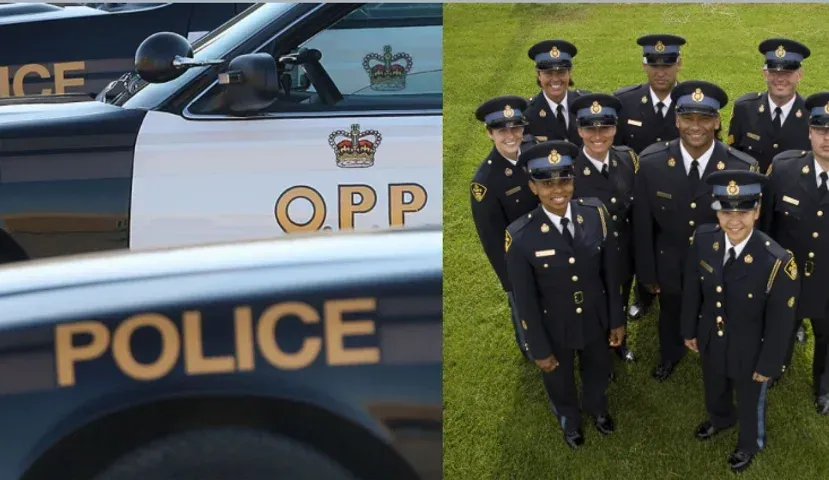
If the OPP can do things better it should. But it does care about its people.
April 11, 2019

If the OPP can do things better it should. But it does care about its people.

The CBC Fifth Estate program “Officer Down” aired March 10th, was billed as being a “raw and honest insight into a culture at one of Canada’s biggest police forces that has led to a series of suicides by OPP officers”, but in my opinion it unfairly tarred an entire organization as being unsupportive and uncaring. Nothing could be further from the truth.


In these difficult times, I truly hope the majority of the OPPs wonderful men and women – the ones that know the OPP isn’t perfect but that still love the force and want it to succeed, stand up and defend the organization.


In these difficult times, I truly hope the majority of the OPPs wonderful men and women – the ones that know the OPP isn’t perfect but that still love the force and want it to succeed, stand up and defend the organization.


Is any police service immune to these issues? Has any service absolutely nailed the PTSD issue? Is there a police department in North American that can say they don’t lose more members from suicide than through line of duty deaths? Sadly, no. It’s an issue that we can never lose sight of. ALL police services need to do all they can to support their people and to prevent that from happening.


I was Commissioner when the Ombudsman came out with his report on PTSD that slammed the OPP as not caring about its people. His theatrical and negative portrayal of the OPP infuriated me, as did his mischaracterization of a number of issues. I had silently dealt with a number of personal issues myself, following many years of experiencing traumatic events, at a time when programs were substandard to non-existent. I did not want our people to endure that same emotional roller-coaster. I also knew that we were doing lots to support our people through singular and cumulative traumatic incidents, only to be awakened by his report to the fact that we were not doing enough.


When the dust settled, we implemented a significant project to do more and to serve our people better. The Deputies and I were totally committed to doing all we could to ensure effective and confidential programs were in place; that they were well-communicated; and to try to mitigate the stigma issues that still existed. It was the right thing to do. We subsequently were doing more at that point in time than any other police service in Canada in my opinion, and our report back to the Ombudsman demonstrated that. He actually complimented us on our progress. That work has continued in the five years since my departure. Then came three tragic suicides of members in 2018, leading to another examination of what is working, what isn’t and what else could be done to support OPP personnel. That work is ongoing. I know that Commissioner Hawkes was equally committed to that, as were the Interim Commissioners since.

If there are issues that need to be fixed and things that the OPP can do better, the executive owes it to their people to do just that. Then, the entire supervisory team and all OPP colleagues – whether uniformed or civilian and regardless of rank or position, also have a role to play in eliminating stigma issues. The biggest challenge still remains “stigma” and all the best programs in the world won’t help if members suffer in silence because they feel that to use the programs will make peers and supervisors think they are weak.


OPP Recruiting continues to be inundated with direct hire applicants from other services. Members talk between services. They know which services have what to offer, or not, and the OPP is most often viewed as a great police service that generally treats its members quite respectfully and like the adults and professionals that they are.


There’s a small group of members out there, some retired, that are determined to change that positive perception because of real or perceived unfairness to them. No bullying or harassment is ever right or acceptable. None. Perhaps some of these folks were truly treated poorly at some point, which is sad. And some of it happened on my watch, which I feel badly about. I thought many of the great programs we put into place in my tenure were working, only to find out that a number of members at various ranks didn’t buy in, didn’t support others and still treated some members unfairly. It’s hard to fight that as the leader. You often don’t know about failures until they become glaringly obvious and then it’s too late.

Someone is broken. But I was the boss and I have to accept ownership for any mistreatment that was inflicted. I apologize for that.


But perhaps “some” just don’t want to accept any personal responsibility for their own failings and want to blame everyone but themselves for the way their own careers went.


I’m confident that there are thousands of current and past OPP members that don’t agree with many of the allegations made, but we continue to hear from the vocal and negative minority while the majority remains mute.


Members should speak for themselves – good, bad or indifferent. They are not lemmings and shouldn’t simply follow some of these people as they try so hard to paint a great organization as uncaring. At the same time everyone should contribute their thoughts and suggestions on how to make things better for all. That’s what the dialogue should be about.
By Chris Lewis June 6, 2026
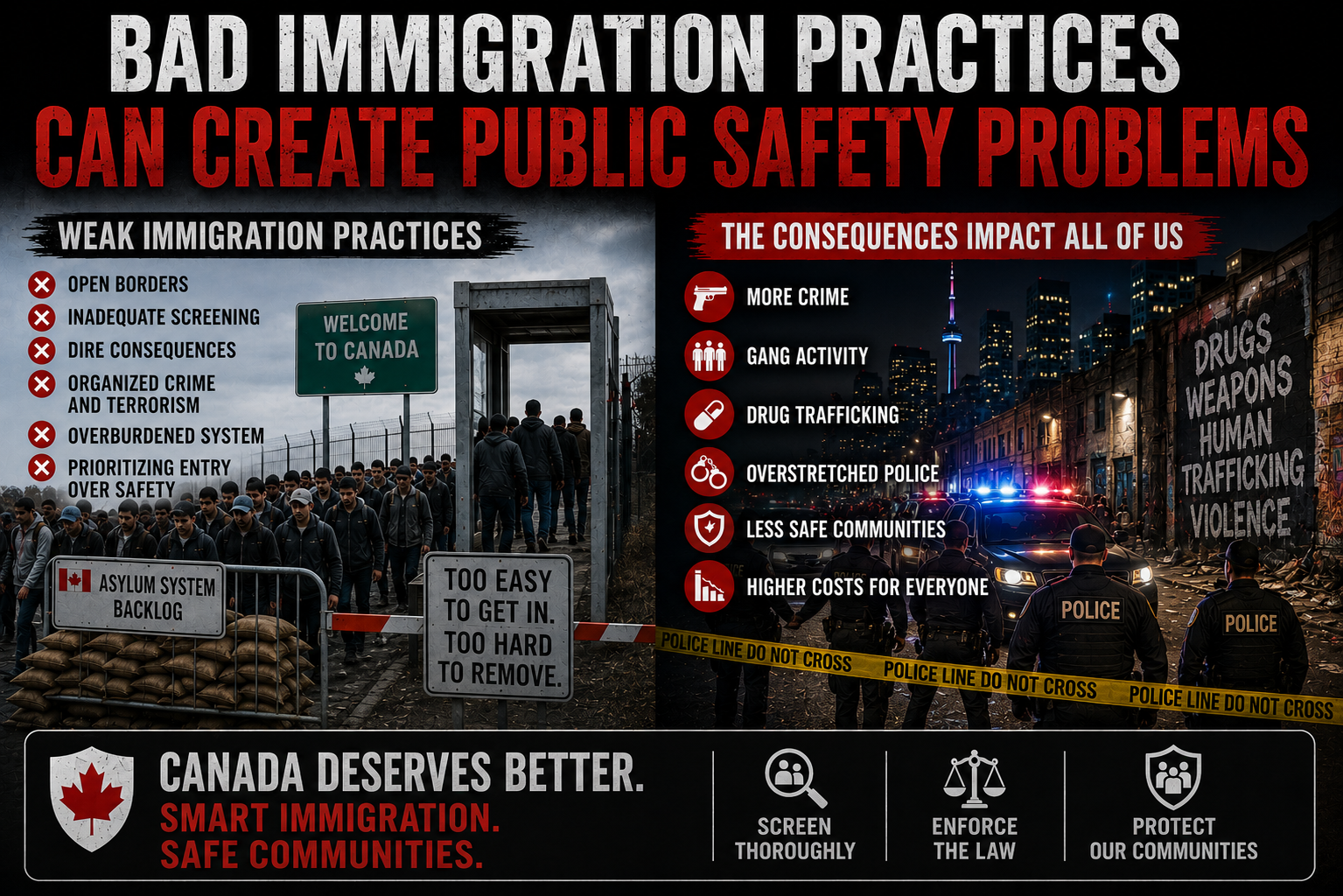
Police become the default response to bad immigration policy
By Chris Lewis March 28, 2026
Leadership is inundated with risk, every hour of every day, in all sectors. In policing, legislative authorities and established policy are the ever-present guideposts, but occasionally policy just doesn’t apply. At times someone has to just make a decision to do something, or not, or they will fail the public they serve and the personnel it is their duty to lead. If it goes bad, time to own up, do damage control, learn from it and move forward. It always frightened me when I saw some at the senior executive level in policing think that supervisors and managers operate in a pristine little bubble where nothing should ever go wrong. Then when it did because some supervisor tried their best to make something work for all the right reasons, they wanted to pigeon-hole the person that took the risk. There were times during my own career when executives were not encouraged to take any risk either. In fact, taking risk was career risk in itself. Despite the best of intentions, if it went bad, the one ‘responsible’ be forever labelled as having failed. Even if the gamble went well, the jaundiced eyes from above would still forever look at them as being a potential liability. It became the “Oh, him. He’s the one that...” At times the daily decision making of high-level commanders would be second-guessed by those in the executive suites – some of whom had never really commanded anything. My buddy retired Chief Wayne Frechette used to describe these folks as: “They’ve never been out after dark on company time.” I know this same concept was alive in many other police services. Some at executive levels actually did serve in operational roles at some point but they never took a risk. Somehow, they were fortunate to skate through difficult situations through sheer luck as opposed to good decision-making and never developed any scar tissue along the way. They didn’t learn from failure – they survived by luck. They also were viewed by weak executives above them as being golden because there was never a milli-second of negativity around them. They were Teflon. But those that worked under their “command” (for lack of a better word) had no respect for them. They simply watched them walk around with coffee in hand, never leaving the office or making a decision. It wasn’t leadership, but it did pave the way to stardom from on high, for some. True leaders do take risks at times. Many I worked with and for did it all and did it well. They did so in the best interests of those they served and those they led, because it wasn’t about themselves, but was done in the service of those that placed their trust in them. Policy simply doesn’t fit every situation. It is most often a guide that anticipates most circumstances that employees will face, particularly the more common (high-frequency) ones. But it cannot predict every possible scenario. When that happens in policing, it can occur in very unlikely situations (low-frequency) that are incredibly high-risk. Supervisors cannot say “Sorry folks, the book doesn’t cover this one” and run away crying. They also don’t have time to tell bad guys, “Hey big fella, sit tight. We need to take a pause here and get the whiteboard out so we can have a group-think about how to stop your murderous rampage.” I think that many pseudo-leaders – far too many, are afraid to make risky decisions out of fear that an error will jeopardize their career. Instead, they risk their careers by not making decisions. Or as I like to say: “their fear of career-risk, risks their careers.” This can be fatal in the policing world. When a police supervisor shirks their responsibilities or quivers, sucks their thumb, and prays for the situation to go away, thankfully constables will come forward and do their best to get their teammates through it. Sometimes that ends well and when the supervisor emerges from their fear-induced coma, they will more often than not take credit for the success. But when the situation goes to hell-in-a-handbasket – despite best efforts, the pseudo-leader will document the risk-taking employee and add another bullet-point to their list of things they’ve done to “hold people accountable.” The panel at their next promotional interview will likely hear the false rendition proudly told. I hear examples of this practise from serving police officers across North America on a much too frequent basis. True leaders develop a culture of trust among those they lead that their suggestions and feedback are encouraged and valued. Their confidence that the leader wants their input encourages them to constantly analyze situations and give thought to what policy says and the options available when policy says nothing. That is good for the employee’s development and may save the leader’s hind-end and the continuity of the team on occasion when an employee steps forward in a crisis. Having said that, there will clearly be situations where there isn’t time for the whiteboard, and a decision needs to be made by the responsible “leader.” When it doesn’t work out, the real leader will step forward and be accountable. But when it does go well, the true leader will allow the light to shine on the team they have the honour to lead. In my view, we’re not seeing enough of that in North American policing. We need more genuine leaders at all levels of law enforcement organizations. Developing and promoting real leaders that can manage risk effectively is a must. Anything less fails everyone.
By Chris Lewis March 26, 2026
They used to be simply a "nice to have."