New Paragraph

OpEd: Emergency Act inquiry serves as a reminder of the need for better provincial legislation
December 5, 2022
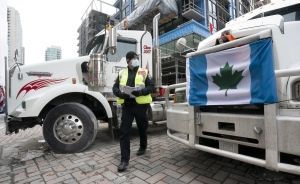
A police officer walks between parked trucks as he distributes a notice to protesters

Enacting the Emergency Act last February to end the Freedom Convoy protest in Ottawa may or may not have been in keeping with the legal threshold for invoking the never before used legislation. My vote is “not”, but I digress. The mandatory hearing into that legal question has ended its fact-finding phase and Justice Rouleau is currently penning his findings and recommendations.

The largely well-presented and scripted evidence of the Prime Minister and that of some key ministers should have laid out a transparent process and some semblance of a rational justification for the invocation of the Act. I truly hoped that I had been wrong in my assessment of it being no more than a political game of smoke and mirrors and that key evidence from government would prove me so. But that was not to be.

For the first month that evidence was presented – particularly in cross examination, it appeared largely to be a post-mortem of police planning (or lack thereof) and at times an outright attack. Albeit it interesting for the most part and demonstrative of some planning, communication and response failings on the part of police, none of that evidence in my opinion demonstrated that the threshold for the activation of the legislation had been met. And moreso, it cemented the fact that the police had not requested it.


Then came the evidence of protest “leaders”, although I use the term loosely. The only thing that emerged from that show in my view was proof that an unorganized group of clowns somehow drew a cast of thousands together to disrupt some major cities and international trade routes for weeks – at a tremendous cost to taxpayers. It was more by happenstance on their part than good management. It is scary to wonder what a well-organized and more calculated team might actually be capable of.


Regardless of the findings of the process, we may never clearly know the reality of the decision-making methodology used by cabinet or the true details of their discussions. The testimony of elected officials and senior bureaucrats has been political theatre at its finest. I am guardedly optimistic that Justice Rouleau could see through that and that recommendations made will assist all going forward, as will the critical lessons-learned by law enforcement leaders, planners and city officials.


Will the Emergency Act be rewritten to address the definition of “National Security” and more? At minimum it would be nice to see a definition that isn’t a moving target or best guess by cabinet. After all we never did hear from the government lawyers that advised cabinet that they were justified in their action. It’s kind of odd to say the least, that in a legally mandated inquiry before a commissioner who is also a Justice in the Court of Appeal – in front of a room full of lawyers, we couldn’t hear what lawyers said to Ccabinet members while debating a legal issue. Only in Canada.


What is abundantly clear to me is that it is time to renew provincial emergency legislation to better meet the needs of the protest environment and let the federal legislation continue to be directed at the “big one” (like a real insurrection) when truly required. Sadly, although it hasn’t happened yet, we all know an event of that proportion may happen at some point. However, the vast majority of large events could be effectively handled by the provinces under a renewed framework that has more teeth.


Policing is a provincial responsibility. The provinces are accountable for police legislation, standards, training and oversight. They also each manage their own Provincial Emergency Act. In the Ontario example, the act contains an overarching process piece that generally applies to any provincial emergency, as well as a number of annexes that are specific to individual types of emergencies. It even has the Provincial Counter Terrorism Plan attached as an annex. An additional segment that addresses the overwhelming and protracted protest environment is now worth developing.

Some of the issues that at this point in our history need to be discussed and addressed (at minimum):

  • Inter-provincial authority for police officers in emergency situations. It needs to be simpler and expedient;
  • The ability for provinces to force some service-providers (i.e. towing companies) to assist and be legally indemnified while doing so;
  • A clear and transparent process to enact the legislation through a bi-partisan committee with a sitting-government majority, where relevant threshold issues are documented upfront;
  • Traffic routing, “no-go” pedestrian zones, towing and driver’s licence suspension authorities all clearly established in one document without having to turn to several disparate pieces of provincial legislation to meet operational needs; and
  • Rationale and process clarity for linking into federal emergency legislation as well as for accessing federal resources.

I’m not suggesting that such enhanced provincial legislation be enacted every time a crowd gathers on Main Street as some will fear. That would conflict with the Charter of Rights and any form of rational thought. Thousands of legal protests happen across Canada every year and very seldom disrupt an entire province or the whole nation. Nor do they very often cripple a major city for weeks; require an influx of thousands of police officers; and cost the taxpayers millions of dollars to address. But when such large and complex events do occur, police need the legislative authority to deal with them effectively and safely.

It is often said that all organizations should “plan for the worst but hope for the best”. That is particularly applicable to agencies that protect communities, provinces and countries.

The Freedom Protest showed us that it’s time to plan better on many scales and the more planning and preparation that can be done in a general sense now – and not in the middle of a crisis, makes total sense. From there, we just have to hope for the best from our police services and political leaders to consistently do what is right, and always for the right reasons.

Chris Lewis served as Commissioner of the Ontario Provincial Police from 2010 until he retired in 2014. He can be seen regularly on CTV and CP24 giving his opinion as a public safety analyst.
By Chris Lewis February 11, 2026
Policing depends on public trust. So does police oversight. When either loses credibility, both suffer and the public they are sworn to serve isn’t sure who to believe or where to turn. In recent years, calls for stronger police oversight have grown louder, often driven by a small number of high-profile misconduct cases. Confidence in institutions by the public – often fueled by ridiculous social media theories and damnations, is more fragile than in the past, and reputational damage spreads faster. Despite the fact that Canadian police officers operate under tight legislative and regulatory frameworks that exceed any other Canadian profession in my view, existing oversight bodies feel pressure to take action quickly when bad things happen, as isolated as they may be. But there is a risk in this moment that deserves equal attention: the risk of overreach. The seven officers who have been alleged to have committed crimes – including serious ones that involve organized crime, must not be allowed to redefine an entire profession. Public trust certainly adds urgency to this moment. When corruption cases like this surface, the public does not necessarily see them as isolated failures. They see a system that is broken and in my view in this instance they see that unfairly. Policing is unlike most professions. There are over 70,000 police officers in Canada, comprised of federal, provincial and municipal officers that work under the worst of circumstances at times and face the harshest of critics. As a result of the arrests of seven serving Toronto Police Service (TPS) officers as well as a retired officer, then the subsequent suspension of two additional TPS officers and two Peel Regional Police Service officers, a large portion of the Canadian public are focusing on the ‘bad’ and forgetting the wonderful and brave police work occurring in their communities 24/7. Officers exercise coercive authority on the public on behalf of the public, often in volatile environments. They have right to take away people’s liberty and in the worst of situations to take lives. That authority most definitely demands the greatest of accountability, but it also demands reasonable, sensible and balanced oversight. Oversight systems designed around ‘worst-case scenarios’ risk governing by exception rather than thoughtful considerations and reality. One of the most overlooked consequences of overly broad oversight is its impact on ethical officers. When serious misconduct is identified, entire services face scrutiny and as a result of the Inspector General of Policing’s announcement to inspect all 45 police services in Ontario, the impacts are far reaching and not isolated to the police service of the members in question. The risk is that the resulting collective stigma will not only damage public trust but will also hurt officer morale; officer initiative may decline; recruiting could be impacted; and the reputation of the entire profession across Ontario will be damaged because of the alleged actions of a few. Oversight that blurs critical lines risks judging officers by association rather than their individual conduct. Officer trust in the oversight system and public trust in the policing profession could both be further harmed. As a result, both the Toronto Police Association and the Police Association of Ontario have rightfully expressed their concern regarding the inspection of all of Ontario’s police services. Their distress is that the announcement may be read by many that police corruption is rife across the province. At this point we do not know how much of this alleged criminal activity occurred off duty, versus on. We don’t know all the details of what they may have done and how, let alone what processes, policies or systems within the TPS that may have to be examined by the Inspector General. He may well have identified them all, but perhaps not. As the investigation portion by police continues, more things for inspection may be identified. In the meantime, I have no doubt that Ontario’s police Chiefs are reviewing their processes based on what they know so far, to ensure their policies, systems and internal oversight mechanisms are as tight as they can reasonably be. The seven charged officers are suspended and before the courts. The justice system is entrusted with dealing with these allegations from here. Others not charged but under investigation are suspended as well. There was no rush to begin a review process as this unfolds. Announcing that it will occur when the criminal investigation is complete and when they are armed with a more fulsome understanding of the issues that should be examined, would have been more appropriate. None of this lessens the need for accountability. It argues for thoughtful processes, analysis and reporting. Misconduct should be addressed decisively and dealt with through due process as it is, but broad oversight driven by isolated wrongdoings risks weakening the institutions we all depend on. Public trust matters. Undoubtedly. But so does institutional trust in police officers. In my view, processes that signal broad-based suspicion undermine the trust they are meant to protect. Oversight works best when it is firm, fair, and controlled.
By Chris Lewis February 7, 2026
Thursday’s announcement of the arrest of seven serving and one retired Toronto police officers for corruption, was a dark moment for policing in Canada and for the communities that trust their police to always do what is honest and right. At times like this it is too easy for us all to lose trust in those in which we should hold the highest level of trust in society, because of the actions of a few. I believe that we must remind ourselves about all that is good in policing in Canada – where training, standards, equipment, professionalism, governance and competence are second to none in the world. I view this as both bad news and good news stories. The bad news is that seven officers allegedly broke their oaths and committed heinous crimes. Startling, sad and completely unacceptable for the profession and more importantly for the public they were sworn to serve. The “good” news (although I struggle with the word) is that the system worked. Suspicions arose about a certain Toronto Police (TPS) officer’s potential involvement in a crime in York Region. Police there notified the Chief of the TPS, and they quickly agreed that York Regional Police (YRP) would lead the investigation, and TPS would remain in a support role by providing Professional Standards investigators and other assistance as required. I assume that would mean investigative support personnel and access to internal information about the TPS officers in question, like their schedules; what police cars they were driving; assignments and personnel file information, at minimum. By design, the TPS Chief did not have decision-making authority in the investigation. None of that raises any red flags for me. This was a large and complex investigation that eventually involved 400 officers and would require highly experienced investigators and specialty personnel. YRP and TPS have all of that and more. The leaders that addressed the media spoke competently and professionally, leaving no doubt that they would leave no stone unturned. Evidence was gathered and arrests of officers and others were made. The public was then appropriately advised of as many details as we have ever seen released in a media conference when charges were before the courts and an investigation ongoing. TPS Chief Demkiw announced he was seeking to suspend at least some of the officers without pay. That is something that has only recently became acceptable under Ontario’s policing regulations and must be used judiciously. Of course, social media “experts” and anti-police pundits took over from there. Please allow me to offer answers to some of the most consistent queries: Why wasn’t an independent oversight body like the Special Investigations Unit (SIU) brought on to investigate? Police shouldn’t investigate police! It’s not the legislated mandate of the SIU to conduct criminal investigations into police except in specific circumstances around police use of force or sexual assault. Nor is it the mandate of Ontario’s Inspectorate of Policing. These governing bodies do not possess the expertise or resources to conduct massive criminal investigations into officers and organized crime groups. Only large police services have the critical mass and knowledge to manage such difficult operations. An option for Chief Demkiw was to let his Professional Standards personnel be the liaison for TPS information and potential Police Act charges against TPS personnel that might emerge but leave the investigative support/assistance piece to another large outside service. That would’ve helped suppress any concern around TPS investigating their own. But police services often conduct criminal investigations into their own people with regularity in Ontario, unless they involve senior officers. There’s no hard and fast rule or Ministry guidelines on the issue to my knowledge. The Toronto Chief should step down. This happened under his watch. I cannot speak to his day-to-day job performance, but in my view, Chief Demkiw did not handle this case wrongly. The alleged illegal actions of 0.12% of his police personnel do not justify his removal. If he knew and didn’t take action that would be different but there is no suggestion of him doing anything but throwing his full support behind the YRP investigation. Again, perhaps he should’ve kept TPS out of it as much as possible, but that was a judgement call made in the early stages of an investigation that grew very large over time. All cops are corrupt. Why didn’t other officers stop them? What? This was seven officers in a police service of almost 6000 TPS officers and out of over 70,000 police officers in Canada. It is awful, without a doubt and concerning to say the least, but this does not mean there is a wave of police corruption and ties to organized crime across the nation. As this criminality unfolded and as we speak, thousands of officers are on the streets of Canada, saving lives and risking their own; patrolling communities; preventing crime and victimization; responding to life and death situations; arresting evil criminals and more. They do that professionally, bravely and honestly, or they are held to account under various laws and disciplinary processes. They are governed and regulated more than any other profession in Canada. Yes, some cops (even one is too many) out of those 70,000, commit crimes in their careers, which is unacceptable. Some of that occurs while they are on duty, some not. It is disappointing when it happens, but with rare exception police leaders will not accept it and will deal with it expeditiously through due process. In cases where a police supervisor or executive doesn’t take proper action, they will be held to account as well. As a rule, no one hates dirty cops more than honest cops. They hurt the profession as a whole across the continent. Canadian officers take a reputational hit regardless of where the wrongdoing occurs in North America. We don’t know the details yet of what these accused officers were doing or how much of it they were doing on the job, versus off duty. IF evidence comes to light in the ongoing investigation that colleague officers knew or participated in any way in the criminality, they will be in trouble as well. Let’s not jump to conclusions that other officers “must have known” and let the investigation run its course. Why do officers not have more oversight on the use of police databases? Police officers and a number of civilian colleagues have access to the Ministry of Transportation (MTO) database that holds all licenced driver and vehicle registration information in Ontario. Most police cars have computers in them that can access that information, which includes driver’s and owners’ addresses. It is accessed non-stop, 24/7, as a regular part of core police business. Other databases involving outstanding warrants and criminal history, as well as occurrence records are similarly accessed. Government employees that work at MTO or in some other Ministries have like access to people’s names and addresses. That is reality in all 10 provinces. We cannot limit legitimate government employee access to vital systems on the off chance they may be inappropriately used. That includes those that we entrust to carry guns and make life and death decisions. When such databases are misused in some way, proper action must be taken promptly, as it was in this case, as opposed to hamstringing the operability of several hundred thousand honest employees across Canada. Canadian police officers are internationally highly-regarded, but they are human, have frailties and will honestly err on occasion while truly trying to do their best. That can be dealt with and repaired when it occurs. But when officers commit acts of malice, they will be appropriately held accountable and dealt with through due process. That is the bedrock of Canadian policing. Public trust in police is paramount to effective policing, and largely we enjoy that in our country. We cannot let this dark day define what policing actually is in Toronto or anywhere in Canada. Canadians should move forward with confidence that the system did work in this case. Those that violated our trust are before the courts. The vast, vast majority of officers that are still out there bravely doing what they do so well, will never let us down. Please give them a chance.
By Chris Lewis January 26, 2026
It’s certainly not Bovino, Noem and higher. Over the past several months the U.S. President’s seemingly valid promise to close the southern border and to rid the U.S. of illegal aliens who are “killers, rapists, drug dealers and individuals from mental institutions” has evolved into something less defendable. Like him or not, it was tough to argue with the public safety need to deport dangerous criminals back to whence they came. I wish Canada would do the same, but in a more strategic way. Chasing undocumented women through Home Depot and dragging U.S. citizens out of vehicles on Main Street – while clad in mostly civilian attire, screaming profanities and with covered faces, has not worked well for ICE and CBP, in terms of public perception and community trust. Enforcing these laws is not easy for those agencies, even when acting within their legislative framework and with probable cause. Angry crowds; individuals with far-left anti-government convictions who just want to hijack the agenda and commit violent acts; and the doxing of federal agents to cause threats to them and their families, cause untold stress on and danger to law enforcement. None of that is justified and is most often a crime. The public needs to stay out of these operations. If someone interferes with the agents and/or their lawful operations, they should expect to be arrested. Placing cameras in officers faces or trying to obstruct them as they conduct an activity, does nothing but raise the temperature of the operation and will end with the placement of handcuffs. Videoing from afar is different, but some take it to the next level. If they threaten anyone with a weapon of any kind, they should anticipate being shot and perhaps killed. That is reality. But at the same time, law enforcement cannot exist without public trust. If the various Department of Homeland Security (DHS) entities that are conducting these operations always acted as per the original strategy and didn’t often violate the rights of people based on the look or colour of so-called “suspects”, as professionally as possible, there would likely not be such an inflammation of the normal American citizen psyche. After all, Trump was elected in part based on his stated “criminal illegal alien” agenda. However, the way his goal was operationalized and the questionable tactics often publicly witnessed has denigrated the trust of many citizens on both sides of the political spectrum. The most recent loss of life occurred in Minneapolis Minnesota on Saturday January 24th. I won’t pass final judgement on the actions of the agents involved in the shooting death of the U.S. citizen there before the results of a professional and unbiased investigation are released. I was obviously not on the ground with those officers to see and hear all they did from their various positions and angles. I have watched all the videos that have been posted, however, and I will say this: “At this point, it does not look good.” When I was a police commander and received information from the field of a critical incident, the initial information was seldom accurate. In fact, over the hours to follow it changed regularly. I would not make any proactive statement to the media, but if asked, I would simply say that we had the proper resources on the ground and I would await verified information, etc. If it was an officer involved shooting or chase that involved injuries or death, I would follow the protocol of the mandatory independent investigation, and would generally say: “It’s undoubtedly a tragic situation, and my thoughts are with the involved officers, citizens and their families, but it is an ongoing investigation and I cannot provide any more information than that.” But what is the DHS leadership saying? What are elected officials saying? Some have already defended the agents and others – like the Governor, are damning them. Within hours of the shooting CBP Commander Greg Bovino publicly defended the actions of the officers, saying that the deceased man had been armed and that the suspect intended to “do maximum damage and massacre law enforcement.” Yes, he was armed, according to local police, but lawfully licensed to do so according to the 2nd Amendment that many Americans treasure. Regardless, it is not clear in any video so far that the man held anything but a camera in his hand when brought to the ground, and Bovino himself could not bring any clarity to his early statement when asked by the press on Sunday morning. He simply fell back to letting the investigation run its course. Sorry Greg, you’re a day late and a dollar short on that one. Then DHS Secretary Kristi Noem told the media, “This looks like a situation where an individual arrived at the scene to inflict maximum damage on individuals and to kill law enforcement.” She acts like the deceased man brandished a gun and threatened the officers. Trump administration officials then called the dead man a “would-be assassin.” If that was the case, being shot and killed should have been the expectation, but are we seeing that? Not so far. How does any of that banter from so-called leaders lend itself to public confidence for an independent investigation that they can trust? True ‘leadership’ involves doing what is right for the people you serve first and foremost, closely followed by the people you lead. These comments do not exhibit leadership at all. ICE and CBP normally operate in enforcement environments at or near (within a hundred miles of) international border points. They absolutely make dangerous arrests at times. But are they selected and trained to operate within the urban environments we are currently witnessing? Perhaps to a degree, but DHS has hired thousands of agents this past year who have received abbreviated training. That’s never a good thing from organizational and officer risk perspectives. I’m not saying normal ICE/CBP agents aren’t as trained and capable as local and state police officers. I’ve known many and they were wonderful officers, but their basic training cannot be the same. Their operating environments may overlap but are generally different. Similarly, most local cops aren’t trained in border enforcement and immigration laws and practices either. In the Minneapolis situation, local police are not supporting the operational activities of the federal agents. The Chief of Police and Mayor are both publicly opposed. Support by local police should be a given – not for random stops of people that look Hispanic and yelling demands for proof of citizenship, but during valid probable cause arrests and the execution of warrants. To stand and watch DHS officers who are unprofessionally targeting innocent U.S. citizens – including off duty local police officers of colour, comes with a loss of public trust as well as ethical and civil liability conflicts. However, I do believe it is the duty of local police to protect DHS agents who are being attacked in the street. DHS should put an immediate halt on any operational activities outside of international border points and pull back from municipalities. Municipal and state police leaders across the country must put their heads together with DHS officials and sort out who does what and how, very quickly. The need to clarify the roles, responsibilities and rules of engagement for their agencies and their people on the street. By being intelligence-led; conducting thorough investigations; working cooperatively and professionally through their varying legislative authorities as they search for and arrest undocumented criminals, they may be able to restore some level of public trust. This cannot continue as is. CBP’s Greg Bovino gave a passionate speech on Sunday afternoon where he spoke of “choices” made by protestors, politicians and the media. It was apparent that he was passing blame on everyone but the DHS in this debacle. Undoubtedly there have been poor choices by many but come on, man. You, the DHS Secretary and your ICE counterpart need to make the “choice” to pause, reflect, regroup and strategize for the good of the people you serve, the American people. Then your President needs to make the right choice and support the change.