New Paragraph

Retirement: The Loss of a Sense of Belonging
May 21, 2021

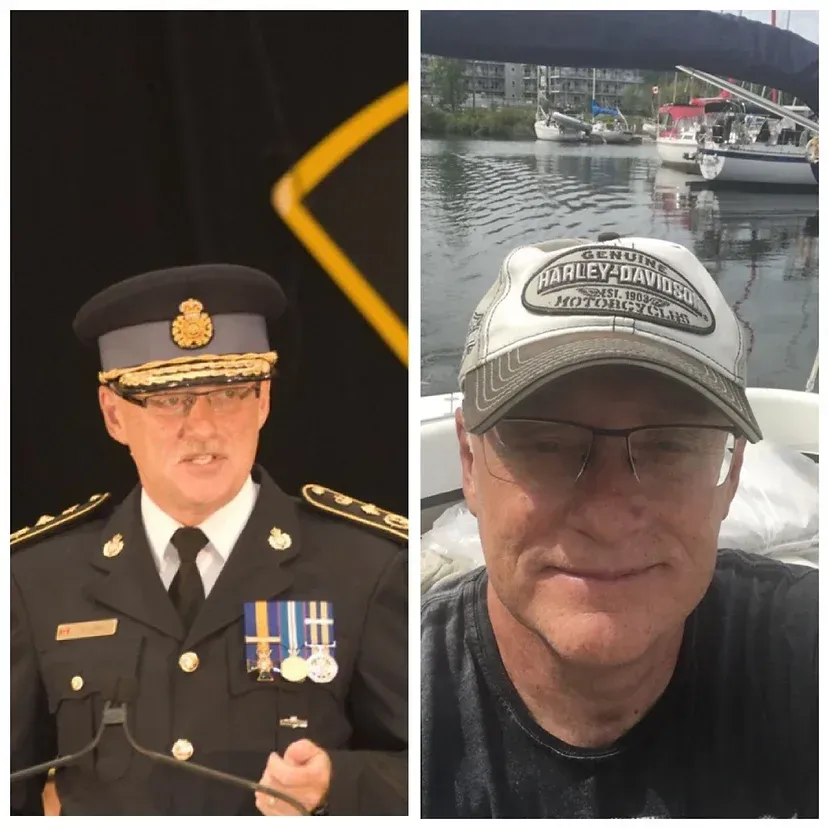
I’m not afraid to admit that I struggled with retirement after 36 years in policing. Quite a bit in fact. On occasion I still do.


It isn’t that I’m no longer “the Commissioner” whatsoever. I loved my job and the ability to positively impact the lives of thousands of wonderful personnel, but I don’t miss the politics, the financial pressures or the stress one little bit.


What I’ve come to realize is that retirement has brought me a lack of a “sense of belonging”. I belonged to the same great police department for most of my adult life. With that I had ring-side seats to the greatest show on earth! Watching from the benches isn’t near as gratifying. I’m not whining or complaining about my lot in life, I’m just being honest about the retired life versus a life in policing. I suspect many retirees feel the same.


Having a plan going into retirement certainly made my transition easier. I had a couple of contract jobs lined up; a motorcycle to ride; a fitness level to renew and a “honey do” list of tremendous proportions. I’m sure that those who retire and sit on the couch not sure what they are going to do for the remaining decades of their lives struggle even more than I did. And we all know others that simply don’t care at all and maybe never really did care about the job or the people. They’re not likely to miss what they were never passionate about.


My phone went from dozens of calls a day and hundreds of text messages, to complete silence. I initially had to shake it to see if it still worked. For awhile it bothered me that I wasn’t hearing from people I once heard from hourly and met with daily. Then as time went on I thought, “I may not be as busy as I once was, but those folks still are.” I also recalled that I hadn’t always regularly contacted people I thought the world of when they retired.

I put former colleagues into 4 categories:


1. The people that were loyal and dedicated employees that truly enjoyed working with you and appreciated you, but are simply too busy in their lives to regularly connect.

2. People that never did really particularly care about you or dislike you, but interacted with you because their job forced them to.

3. People that never liked you in the slightest. And lastly,

4. People that went out of their way to be seen and heard because they thought you could help their career, but deep down didn’t really care if you lived or died.


That’s not a criticism, it’s just the reality that a career as a police executive brings. Some love you, some hate you and some really don’t care either way. I firmly believe that if you’re truly a supportive and caring “leader” that people trust and connect with, you’ll have way more loyal followers than haters, but all those categories come with the turf. I’ve fought the urge to attend most policing events. It simply isn’t my role anymore, as the OPP has had 2 great Commissioners since my departure. They don’t need me hanging around at every turn. I also never wanted to be that police leader that never really went away, so I carefully select what I go to and which events I don’t.


So what do I miss?


I miss people. I don’t miss the circus but I do miss the clowns. I miss formally interacting with uniformed officers and civilian employees at all levels, as well as their families – celebrating their successes in the good times and helping them through the bad. I miss saying hello to staff in the halls of our HQ, in the cafeteria and parking lot. I miss meeting volunteers like the Auxiliary members, the Pipes and Drums and the Choir, and expressing my appreciation for all they do.


I miss outside agency partners. I enjoyed working together with them to deal with problems that were bigger than us all. I miss the communities we served, including “most” of the politicians and “all” of the good folks that supported us as we did what we could to protect them from so many forms of victimization.


I miss chasing the bad guys. Not that I personally did any of that in the last many years of my career, but I still loved to see our people working so bravely to keep communities safe and then smiling like a proud father when their criminal, traffic and tactical operations came to a successful conclusion. Thankfully some of that need is still met through my ongoing media commentary on policing issues. That at least makes me keep current on public safety challenges across the globe.


I miss hearing the day to day stories that warmed my heart. Tales of our officers finding a lost child or shoveling the snow off the front walkway of an elderly citizen, and so much more.


I miss sitting around the senior management table with the Deputy Commissioners and others as we brainstormed various approaches to the latest challenge as a team.


I miss walking the lines of our personnel in their dress uniforms at recruit graduations, police memorials and sadly the occasional police funeral. Simply shaking the many hands and saying hello to our folks always recharged my batteries no matter how solemn the occasion might be.


But mostly I just miss actively belonging a great organization that is comprised of great people who are committed to public safety. Although in my media role I will be honestly critical on occasion, I’ll always be in their corner and proudly cheering them on from afar. I have accepted that my role is to be an ambassador for them, for the policing profession and for all emergency responders. I will do that with passion and immense pride.
By Chris Lewis March 18, 2026
The March 17 th announcement by the Toronto Police Service (TPS) regarding the Ontario Provincial Police (OPP) investigation into allegations by an Ontario Justice that three TPS officers colluded and lied during a 2024 murder trial against a man that ran over and killed TPS Constable Jeffrey Northrup in 2021, has further inflamed the debate over who should investigate alleged police wrongdoing. This instance combined with the recent arrests and ongoing police investigation into several TPS officers for their alleged involvement with organized crime, has brought this discussion to a boiling point. I appreciate the public perceptions around this investigative model given that the average citizen doesn’t necessarily understand the professionalism and commitment of police investigative teams like the recent OPP Criminal Investigation Branch (CIB) group. I have all the confidence the world in that team, but I also personally know the ability and integrity of the OPP Detective Inspector in-charge. So, if these investigations aren’t carried out by police, who will do them? They do not fall under the mandate of the Ontario Special Investigations Unit (SIU), which by the way is largely comprised of former police criminal investigators and forensic identification experts, many of whom investigated homicides in police services. For SIU to assume a larger role, they would have to grow exponentially and expand their team of ‘former cops’. These cases generally do not fall under the purview of Ontario’s Inspectorate of Policing either. They would loosely fall under the oversight role of Ontario’s Law Enforcement Complaints Agency (LECA), who is responsible for receiving, managing and overseeing public complaints against police, but frankly they don’t have mandate or the horsepower to conduct complex criminal investigations. They oversee the “public complaints” that may lead to a criminal investigation, but the investigation would be the responsibility of a police service to conduct. An expansion of the LECA would require a tremendous amount of funding and human resources, most of whom would also be former police officers. Hiring and training civilians to conduct such investigations is an option, but largely an incomprehensible one. Police criminal investigators are trained officers that generally start out as uniformed officers responding to occurrences and investigating more routine and less serious crimes, i.e. minor assaults and property crimes. They build investigative expertise over time, including in interviewing and interrogation; gathering and securing physical evidence; legal processes like obtaining judicial authorizations; presenting evidence in court; and various investigative strategies. They learn how to work with special police units that provide specific investigative skills, and more. All of this doesn’t happen overnight, but over a period of years and with the tutelage of more experienced investigators along that journey. Trying to turn a group of young and well-educated civilians – no matter how intelligent and well-intended, into a team of elite investigators, would be a complete disaster and unfair to the public or to the officers being investigated. Over my many years as a member or as the Director of the OPP CIB, my colleagues and I investigated criminal allegations against cops from other agencies. Before the SIU was formed, we investigated officers from many Ontario police services – large and small, who had used deadly force. Many were cleared and a number were arrested and charged. We also investigated criminal allegations against police chiefs in Ontario. Again, several were appropriately cleared, and some were brought before the courts. Municipal, provincial and federal elected officials were similarly investigated and some charged. Our members also investigated police officers in other provinces, including high-ranking ones. I personally investigated two Royal Newfoundland Constabulary officers that were involved in an arrest that result in the death of a suspect. They were properly exonerated, but I would have charged them in a heartbeat if they had wrongfully killed than man. I arrested an OPP Sergeant for sexual assault. A CIB colleague investigated and arrested two different OPP officers for criminal offences. Both of those officers had been personal friends of mine and years later committed suicide. There are tons of similar examples that I can refer to over my career. All of these involved the oversight and legal analysis of a Crown Attorney, sometimes from another province. The interesting thing, and what most of the anti-police folks will never believe, is that in every single one of those investigations, the dialogue that I was involved in with other officers that I worked with or supervised, involved doing what was right. In other words, “If the allegation is substantiated, we will put the case together, arrest them and put them before the courts.” Not even once, did we think about or do anything that would give an officer a pass when they committed a criminal offence. Never. I have every confidence in the world that the vast majority of municipal and RCMP colleagues across Canada would operate under the same guiding principle. Has the occasional officer worked in conflict with that approach? Undoubtedly. Were some investigators not as committed or capable as they should be and perhaps did a poor investigation accidentally or deliberately? Quite likely so. But I truly believe those cases are the exception, not the rule in criminal investigations. Where I more often believe poor investigations or deliberate attempts to inappropriately give a colleague a break continues to occur, is in Police Act investigations, where policy or employee harassment wrongdoings are suspected. I like to think that the focus on that continues to improve, but not fast enough in some cases. Sadly, I know now that unbeknownst to me at the time, it happened under my watch. A focus for my next article. The public and police deserve the very best of investigators to ensure that bad cops are effectively put out of business and good officers are cleared. If there’s another effective option that would appease the doubting public – aside from using current officers from other agencies or creating a new and costly entity that would be staffed by former police officers, I’d like to hear it.
By Chris Lewis February 13, 2026
I say "No."
By Chris Lewis February 11, 2026
Policing depends on public trust. So does police oversight. When either loses credibility, both suffer and the public they are sworn to serve isn’t sure who to believe or where to turn. In recent years, calls for stronger police oversight have grown louder, often driven by a small number of high-profile misconduct cases. Confidence in institutions by the public – often fueled by ridiculous social media theories and damnations, is more fragile than in the past, and reputational damage spreads faster. Despite the fact that Canadian police officers operate under tight legislative and regulatory frameworks that exceed any other Canadian profession in my view, existing oversight bodies feel pressure to take action quickly when bad things happen, as isolated as they may be. But there is a risk in this moment that deserves equal attention: the risk of overreach. The seven officers who have been alleged to have committed crimes – including serious ones that involve organized crime, must not be allowed to redefine an entire profession. Public trust certainly adds urgency to this moment. When corruption cases like this surface, the public does not necessarily see them as isolated failures. They see a system that is broken and in my view in this instance they see that unfairly. Policing is unlike most professions. There are over 70,000 police officers in Canada, comprised of federal, provincial and municipal officers that work under the worst of circumstances at times and face the harshest of critics. As a result of the arrests of seven serving Toronto Police Service (TPS) officers as well as a retired officer, then the subsequent suspension of two additional TPS officers and two Peel Regional Police Service officers, a large portion of the Canadian public are focusing on the ‘bad’ and forgetting the wonderful and brave police work occurring in their communities 24/7. Officers exercise coercive authority on the public on behalf of the public, often in volatile environments. They have right to take away people’s liberty and in the worst of situations to take lives. That authority most definitely demands the greatest of accountability, but it also demands reasonable, sensible and balanced oversight. Oversight systems designed around ‘worst-case scenarios’ risk governing by exception rather than thoughtful considerations and reality. One of the most overlooked consequences of overly broad oversight is its impact on ethical officers. When serious misconduct is identified, entire services face scrutiny and as a result of the Inspector General of Policing’s announcement to inspect all 45 police services in Ontario, the impacts are far reaching and not isolated to the police service of the members in question. The risk is that the resulting collective stigma will not only damage public trust but will also hurt officer morale; officer initiative may decline; recruiting could be impacted; and the reputation of the entire profession across Ontario will be damaged because of the alleged actions of a few. Oversight that blurs critical lines risks judging officers by association rather than their individual conduct. Officer trust in the oversight system and public trust in the policing profession could both be further harmed. As a result, both the Toronto Police Association and the Police Association of Ontario have rightfully expressed their concern regarding the inspection of all of Ontario’s police services. Their distress is that the announcement may be read by many that police corruption is rife across the province. At this point we do not know how much of this alleged criminal activity occurred off duty, versus on. We don’t know all the details of what they may have done and how, let alone what processes, policies or systems within the TPS that may have to be examined by the Inspector General. He may well have identified them all, but perhaps not. As the investigation portion by police continues, more things for inspection may be identified. In the meantime, I have no doubt that Ontario’s police Chiefs are reviewing their processes based on what they know so far, to ensure their policies, systems and internal oversight mechanisms are as tight as they can reasonably be. The seven charged officers are suspended and before the courts. The justice system is entrusted with dealing with these allegations from here. Others not charged but under investigation are suspended as well. There was no rush to begin a review process as this unfolds. Announcing that it will occur when the criminal investigation is complete and when they are armed with a more fulsome understanding of the issues that should be examined, would have been more appropriate. None of this lessens the need for accountability. It argues for thoughtful processes, analysis and reporting. Misconduct should be addressed decisively and dealt with through due process as it is, but broad oversight driven by isolated wrongdoings risks weakening the institutions we all depend on. Public trust matters. Undoubtedly. But so does institutional trust in police officers. In my view, processes that signal broad-based suspicion undermine the trust they are meant to protect. Oversight works best when it is firm, fair, and controlled.