New Paragraph

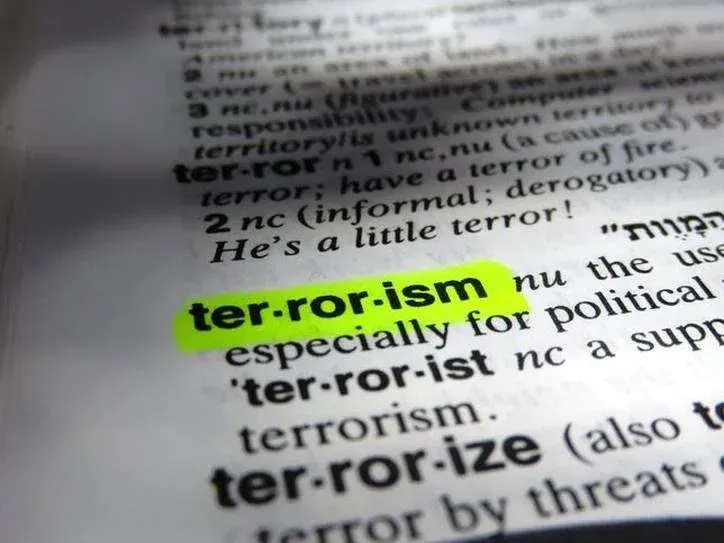
Why the hunger to label all bad things as 'terrorism'?
November 28, 2023

Sadly, awful things continue to happen in society – 24/7, around the world. Tragic, violent events that unfairly take the lives of innocent people and forever destroy the lives of families, friends, witnesses and responding agencies, do take place. Although terrible, they are seldom ‘terrorist’ acts, however. They are often criminal acts like murders and mass shootings – sometimes for no other reason than evil, retribution or insanity. They include horrific car crashes that happen because of carelessness, impairment or a physical or mental health issue. At other times spectacular fires and explosions occur through design or construction flaws, train derailments, electrical mishaps or gas leaks. And yes, occasionally a number of these events are intentional acts for a variety of motives – but are not perpetrated by extremists.


But more often than not, when these tragedies do occur, the fallback assumption by the public is ‘terrorism’. I believe we tend to use the term way too broadly.


The Criminal Code of Canada, at section 83.01 defines terrorism as:


“An act committed “in whole or in part for a political, religious or ideological purpose, objective or cause” with the intention of intimidating the public…“with regard to its security, including its economic security, or compelling a person, a government or a domestic or an international organization to do or to refrain from doing any act.””


Thankfully, by definition, so far that has only happened a handful of times in our country’s history, with very few fatalities.


What is behind the tendency for people to try and fit awful events into a little a little box entitled terrorism? Does it help people to better accept such tragedies by labelling them with that category or does that classification create unneeded fear and anxiety among the masses?


My good friend and colleague, career intelligence analyst and now terrorism author, Phil Gurski, describes it like this: “We have had ‘terrorism on the brain’ since 9/11 and many go right to the ‘it must be terrorism’ button when they hear of an event like this.” (Niagara Falls Rainbow Bridge explosion)

I’ve been in arguments with people from all walks of life when they’ve described murders and other violent acts as being ‘terrorism’ and I took an opposing view. I certainly do not claim to be an expert on anything in life, but I often have an informed opinion, and some become quite indignant when I disagree with theirs.


When a violent may be the act by terrorists, investigative responsibility, command and control changes, from local or provincial police to the RCMP, but all those agencies still have a role to play in the mitigation and investigation. Federal assets (including the military), different laws and authorities may kick in as well as the potential penalties for those ultimately convicted. But normally police do not require those additional resources or far-reaching powers and authorities during day-to-day domestic criminal investigations and trial processes.


The bottom line is that murder is still a criminal act, it’s just the motive behind it that changes. Most of the investigative procedures and protocols remain fundamental, but terrorism ignites national and international interest; brings in intelligence and security organizations that may otherwise not be involved; and creates the possibility of similar attacks occurring simultaneously or perhaps very soon.


Some readers may ask: “Who cares?”


There are two ways of looking at the scenario of using the term terrorism too broadly:


1.     People can end up being so unnecessarily stressed out that it affects their feelings of vulnerability, enjoyment of life and their mental health; and/or


2.     Calling everything terrorism may create a feeling of “here we go again” whenever people hear the word. My fear is that hearing it regularly will make the word become so routine, that if and when real terrorist events occur people will simply roll their eyes and not listen to authorities or take the suggested precautions.


We always say in policing, “Treat every death as a homicide until proven differently.” Similarly, erring on the side of caution when responding to potential terrorist acts and investigations is the right thing to do.


When law enforcement ‘treats’ an event as an act of terror until proven otherwise it makes complete sense. They can reclassify it when they know more and then command, control and investigative responsibility can return to local officials.


But let’s only call it what it is when experts tell us what it is and how we need to respond, and not draw the worst possible conclusions every time a bad thing happens.
By Chris Lewis March 18, 2026
The March 17 th announcement by the Toronto Police Service (TPS) regarding the Ontario Provincial Police (OPP) investigation into allegations by an Ontario Justice that three TPS officers colluded and lied during a 2024 murder trial against a man that ran over and killed TPS Constable Jeffrey Northrup in 2021, has further inflamed the debate over who should investigate alleged police wrongdoing. This instance combined with the recent arrests and ongoing police investigation into several TPS officers for their alleged involvement with organized crime, has brought this discussion to a boiling point. I appreciate the public perceptions around this investigative model given that the average citizen doesn’t necessarily understand the professionalism and commitment of police investigative teams like the recent OPP Criminal Investigation Branch (CIB) group. I have all the confidence the world in that team, but I also personally know the ability and integrity of the OPP Detective Inspector in-charge. So, if these investigations aren’t carried out by police, who will do them? They do not fall under the mandate of the Ontario Special Investigations Unit (SIU), which by the way is largely comprised of former police criminal investigators and forensic identification experts, many of whom investigated homicides in police services. For SIU to assume a larger role, they would have to grow exponentially and expand their team of ‘former cops’. These cases generally do not fall under the purview of Ontario’s Inspectorate of Policing either. They would loosely fall under the oversight role of Ontario’s Law Enforcement Complaints Agency (LECA), who is responsible for receiving, managing and overseeing public complaints against police, but frankly they don’t have mandate or the horsepower to conduct complex criminal investigations. They oversee the “public complaints” that may lead to a criminal investigation, but the investigation would be the responsibility of a police service to conduct. An expansion of the LECA would require a tremendous amount of funding and human resources, most of whom would also be former police officers. Hiring and training civilians to conduct such investigations is an option, but largely an incomprehensible one. Police criminal investigators are trained officers that generally start out as uniformed officers responding to occurrences and investigating more routine and less serious crimes, i.e. minor assaults and property crimes. They build investigative expertise over time, including in interviewing and interrogation; gathering and securing physical evidence; legal processes like obtaining judicial authorizations; presenting evidence in court; and various investigative strategies. They learn how to work with special police units that provide specific investigative skills, and more. All of this doesn’t happen overnight, but over a period of years and with the tutelage of more experienced investigators along that journey. Trying to turn a group of young and well-educated civilians – no matter how intelligent and well-intended, into a team of elite investigators, would be a complete disaster and unfair to the public or to the officers being investigated. Over my many years as a member or as the Director of the OPP CIB, my colleagues and I investigated criminal allegations against cops from other agencies. Before the SIU was formed, we investigated officers from many Ontario police services – large and small, who had used deadly force. Many were cleared and a number were arrested and charged. We also investigated criminal allegations against police chiefs in Ontario. Again, several were appropriately cleared, and some were brought before the courts. Municipal, provincial and federal elected officials were similarly investigated and some charged. Our members also investigated police officers in other provinces, including high-ranking ones. I personally investigated two Royal Newfoundland Constabulary officers that were involved in an arrest that result in the death of a suspect. They were properly exonerated, but I would have charged them in a heartbeat if they had wrongfully killed than man. I arrested an OPP Sergeant for sexual assault. A CIB colleague investigated and arrested two different OPP officers for criminal offences. Both of those officers had been personal friends of mine and years later committed suicide. There are tons of similar examples that I can refer to over my career. All of these involved the oversight and legal analysis of a Crown Attorney, sometimes from another province. The interesting thing, and what most of the anti-police folks will never believe, is that in every single one of those investigations, the dialogue that I was involved in with other officers that I worked with or supervised, involved doing what was right. In other words, “If the allegation is substantiated, we will put the case together, arrest them and put them before the courts.” Not even once, did we think about or do anything that would give an officer a pass when they committed a criminal offence. Never. I have every confidence in the world that the vast majority of municipal and RCMP colleagues across Canada would operate under the same guiding principle. Has the occasional officer worked in conflict with that approach? Undoubtedly. Were some investigators not as committed or capable as they should be and perhaps did a poor investigation accidentally or deliberately? Quite likely so. But I truly believe those cases are the exception, not the rule in criminal investigations. Where I more often believe poor investigations or deliberate attempts to inappropriately give a colleague a break continues to occur, is in Police Act investigations, where policy or employee harassment wrongdoings are suspected. I like to think that the focus on that continues to improve, but not fast enough in some cases. Sadly, I know now that unbeknownst to me at the time, it happened under my watch. A focus for my next article. The public and police deserve the very best of investigators to ensure that bad cops are effectively put out of business and good officers are cleared. If there’s another effective option that would appease the doubting public – aside from using current officers from other agencies or creating a new and costly entity that would be staffed by former police officers, I’d like to hear it.
By Chris Lewis February 13, 2026
I say "No."
By Chris Lewis February 11, 2026
Policing depends on public trust. So does police oversight. When either loses credibility, both suffer and the public they are sworn to serve isn’t sure who to believe or where to turn. In recent years, calls for stronger police oversight have grown louder, often driven by a small number of high-profile misconduct cases. Confidence in institutions by the public – often fueled by ridiculous social media theories and damnations, is more fragile than in the past, and reputational damage spreads faster. Despite the fact that Canadian police officers operate under tight legislative and regulatory frameworks that exceed any other Canadian profession in my view, existing oversight bodies feel pressure to take action quickly when bad things happen, as isolated as they may be. But there is a risk in this moment that deserves equal attention: the risk of overreach. The seven officers who have been alleged to have committed crimes – including serious ones that involve organized crime, must not be allowed to redefine an entire profession. Public trust certainly adds urgency to this moment. When corruption cases like this surface, the public does not necessarily see them as isolated failures. They see a system that is broken and in my view in this instance they see that unfairly. Policing is unlike most professions. There are over 70,000 police officers in Canada, comprised of federal, provincial and municipal officers that work under the worst of circumstances at times and face the harshest of critics. As a result of the arrests of seven serving Toronto Police Service (TPS) officers as well as a retired officer, then the subsequent suspension of two additional TPS officers and two Peel Regional Police Service officers, a large portion of the Canadian public are focusing on the ‘bad’ and forgetting the wonderful and brave police work occurring in their communities 24/7. Officers exercise coercive authority on the public on behalf of the public, often in volatile environments. They have right to take away people’s liberty and in the worst of situations to take lives. That authority most definitely demands the greatest of accountability, but it also demands reasonable, sensible and balanced oversight. Oversight systems designed around ‘worst-case scenarios’ risk governing by exception rather than thoughtful considerations and reality. One of the most overlooked consequences of overly broad oversight is its impact on ethical officers. When serious misconduct is identified, entire services face scrutiny and as a result of the Inspector General of Policing’s announcement to inspect all 45 police services in Ontario, the impacts are far reaching and not isolated to the police service of the members in question. The risk is that the resulting collective stigma will not only damage public trust but will also hurt officer morale; officer initiative may decline; recruiting could be impacted; and the reputation of the entire profession across Ontario will be damaged because of the alleged actions of a few. Oversight that blurs critical lines risks judging officers by association rather than their individual conduct. Officer trust in the oversight system and public trust in the policing profession could both be further harmed. As a result, both the Toronto Police Association and the Police Association of Ontario have rightfully expressed their concern regarding the inspection of all of Ontario’s police services. Their distress is that the announcement may be read by many that police corruption is rife across the province. At this point we do not know how much of this alleged criminal activity occurred off duty, versus on. We don’t know all the details of what they may have done and how, let alone what processes, policies or systems within the TPS that may have to be examined by the Inspector General. He may well have identified them all, but perhaps not. As the investigation portion by police continues, more things for inspection may be identified. In the meantime, I have no doubt that Ontario’s police Chiefs are reviewing their processes based on what they know so far, to ensure their policies, systems and internal oversight mechanisms are as tight as they can reasonably be. The seven charged officers are suspended and before the courts. The justice system is entrusted with dealing with these allegations from here. Others not charged but under investigation are suspended as well. There was no rush to begin a review process as this unfolds. Announcing that it will occur when the criminal investigation is complete and when they are armed with a more fulsome understanding of the issues that should be examined, would have been more appropriate. None of this lessens the need for accountability. It argues for thoughtful processes, analysis and reporting. Misconduct should be addressed decisively and dealt with through due process as it is, but broad oversight driven by isolated wrongdoings risks weakening the institutions we all depend on. Public trust matters. Undoubtedly. But so does institutional trust in police officers. In my view, processes that signal broad-based suspicion undermine the trust they are meant to protect. Oversight works best when it is firm, fair, and controlled.